What Is a Wind Phone?
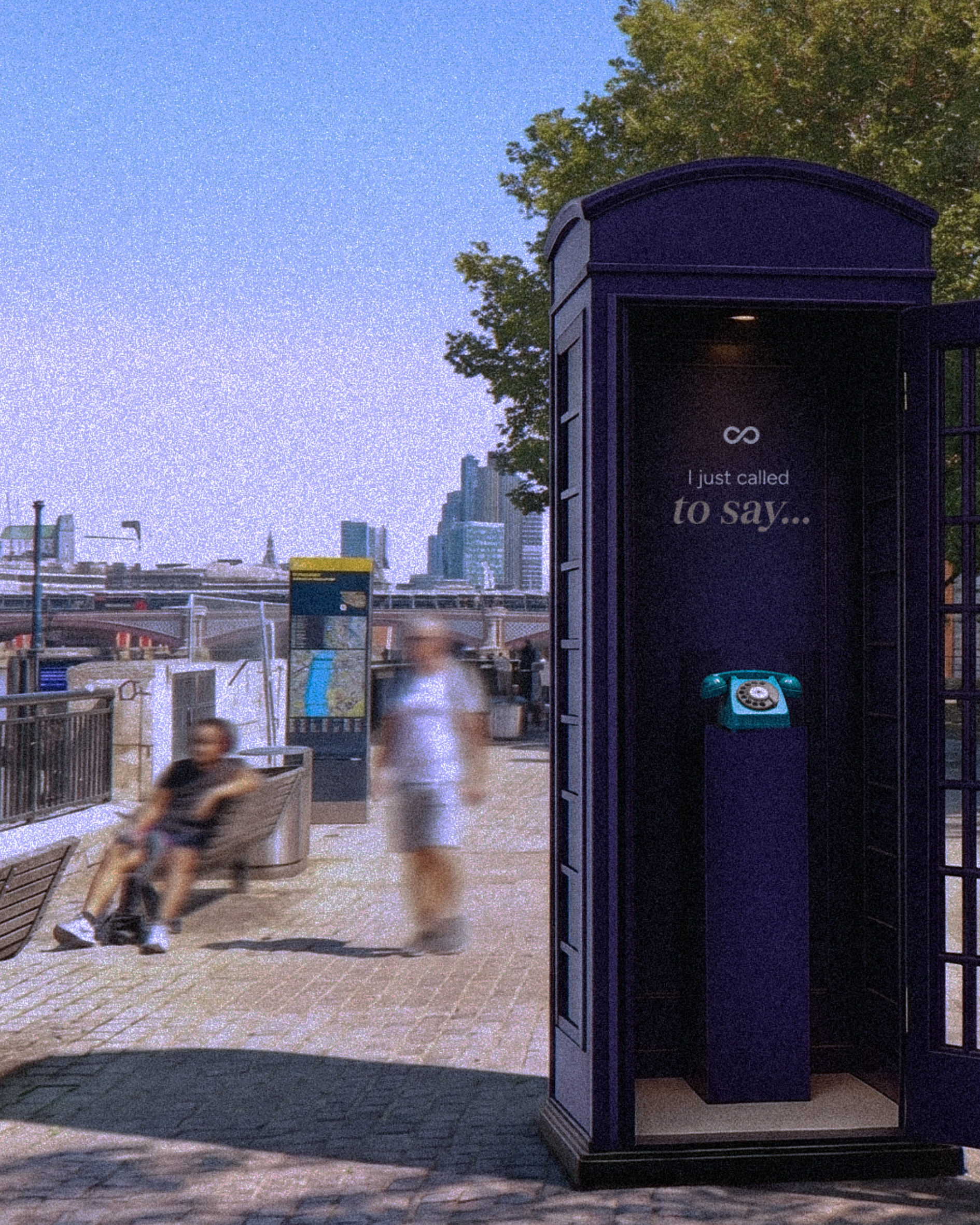
Some of the things we most want to say are the ones we never got to. A wind phone is built for exactly those words.
A wind phone is a disconnected telephone that people use to talk to someone who has died. You step inside, pick up the receiver, and say whatever you need to. The idea is that your words are carried on the wind to the person you're missing. There's no right way to do it, and you can stay as long as you like.
The concept started in Japan and has since travelled to hundreds of places around the world, including the UK. For a lot of people, it offers something everyday life rarely makes room for: a quiet, unhurried space to keep talking to the people they love, even after they've gone.
Key information about a wind phone:
- A wind phone is an unconnected phone, often in a booth, used for one-way conversations with someone who has died.
- It was created in 2010 by Japanese garden designer Itaru Sasaki, who called it kaze no denwa, or "telephone of the wind".
- There's no script. People say "I love you", share their news, or finally say the things that were left unsaid.
- Talking to someone who has died is a recognised, healthy part of grief that psychologists call "continuing bonds".
- Wind phones are usually free, public and open to all. There are now more than 400 across at least 17 countries.
What is a wind phone?
A wind phone is a telephone that isn't connected to anything. It usually sits somewhere calm, often inside a booth or shelter with a chair beside it, in a garden, a park, or along a river. You pick up the handset and speak to someone who has died, just as you would have called them.
The wind phone gives you the privacy, and the permission, to say things out loud, with no audience and no one trying to fix how you feel.
Where did the wind phone come from?
The first wind phone was built in 2010 by Itaru Sasaki, a garden designer in Ōtsuchi, Japan. After his cousin died, he put an old phone box with a disconnected rotary phone in his garden so he could keep speaking to him. He called it kaze no denwa, the telephone of the wind, because his words couldn't travel down a line, only on the wind.
A year later, the 2011 Tōhoku earthquake and tsunami devastated the region and killed around 18,000 people. Sasaki opened his phone box to the public, and people came in their thousands to speak to the family and friends they'd lost. The original wind phone has since welcomed more than 30,000 visitors, and the idea has spread to over 400 locations across at least 17 countries.
How does a wind phone help with grief?
Talking to someone after they've died might sound odd. But it’s actually incredibly common and can be a really healthy way of processing grief. Psychologists call it continuing bonds: the idea that staying connected to someone who has died is a normal part of grief, not something to get over.
The continuing bonds model was set out by researchers Dennis Klass, Phyllis Silverman and Steven Nickman in 1996. It moved grief away from the old idea that healthy mourning means "letting go". Many of us carry our people with us instead. We mark their birthdays. We ask what they'd have done. We talk to them. The British Psychological Society notes that a continued sense of connection with someone who has died is widely reported and entirely normal.
A wind phone simply gives that instinct somewhere to happen. Saying your grief out loud, rather than holding it in, can loosen some of the weight that builds up after a loss. It won't take the grief away. But it can make you feel a little less alone inside it.
Sam Grice founded Octopus Legacy after his own mum died suddenly in a car accident. He puts it plainly:
"Grief doesn't end when the funeral does, and it doesn't end at the first anniversary either. Big days like Mother's Day and Father's Day keep coming round, and every year they can feel like an exclusive event you haven't been invited to. What I wanted was simple. To talk to her. To say the things I never said enough whilst she was here."
What do you say on a wind phone?
There's no script, and nothing you "should" say. The call is yours. If you're not sure where to begin, people often:
Say "I love you", "I miss you", or "thank you".
Share their news: a wedding, a new baby, a job, the things they'd have wanted to know.
Apologise, or finally say the thing that was left unsaid.
Talk through an ordinary day, exactly as they would have on the phone.
Sit in the quiet for a while, and just be near them.
Some people speak for a minute. Others stay much longer. However you use it is the right.
Are there wind phones in the UK?
Yes. Wind phones have been appearing across the UK in recent years, in gardens, on coastal paths and in community spaces. There's no single official register, but there are informal registers such as mywindphone.com which log wind phones in:
- Wind Phone Rainow Cheshire England (What3Words: ///breath.recent.bliss)
- Wind Phone South Bank Queen Stone, London, England (What3Words: ///puzzle.backed.hardly)
Ahead of Father's Day, Octopus Legacy is bringing a wind phone to Queen's Walk on London's South Bank, the first of its kind in the capital. It's free, open to all, and there for anyone who wants somewhere to speak to a dad, a parent, or whoever they're missing. The message it's built around is a simple one: "Dear Dad, I just called to say…". You don't need to book, and you can stay as long as you need.
Can I make my own wind phone?
You can, and many of the world's wind phones are homemade. At its simplest, you need a disconnected telephone (a charity-shop rotary phone is perfect), somewhere quiet and sheltered to put it, and ideally a seat beside it. Some people add a notebook, so visitors can write a message as well as speak one. If you're placing one anywhere public, it's worth getting permission from whoever owns the land first.
Frequently asked questions
Is a wind phone connected to a real line?
No. A wind phone is disconnected on purpose, giving you the freedom to speak openly to someone who has died.
Does talking to someone who has died actually help?
For many people, yes. Psychologists describe staying connected to someone who has died as "continuing bonds", a normal and healthy part of grief rather than a sign that something's wrong. Saying your feelings out loud can ease some of the weight of holding them in.
**Where can I find a wind phone near me in the UK? **
There's no official UK directory, but community maps like mywindphone.com list many publicly shared locations. Octopus Legacy is also bringing a wind phone to Queen's Walk on London's South Bank on 18th June, 2026, free and open to all.
What's the difference between a wind phone and the "telephone of the wind"?
They're the same thing. "Telephone of the wind" is the English translation of the original Japanese name, kaze no denwa, given to the first wind phone in Ōtsuchi in 2010.
Is there an age limit or cost to use a wind phone?
Public wind phones are almost always free and open to anyone, including children using one with a parent. They're made to be welcoming: no booking, no judgement.
Grief doesn't keep to a timetable, and you don't have to face it on your own. Octopus Legacy is here before and after a death, from planning ahead to finding your feet after a loss. Find out how we support people through grief.
About this article
Written by Eliza Elliott Octopus Legacy.
Last reviewed 16/06/2026.
Sources:
- Smithsonian Magazine, "What Are Wind Phones, and How Do They Help With Grief?"
- Wikipedia, "Wind phone" (origin, visitor numbers, global spread)
- Klass, Silverman & Nickman (1996), Continuing Bonds: New Understandings of Grief
British Psychological Society, "Experiencing the presence of someone who has died: A Continuing Bonds Theory perspective" - mywindphone.com (global wind phone map)